Research Questions
2019-20 Australian Fires
Examining fire patterns in Australia
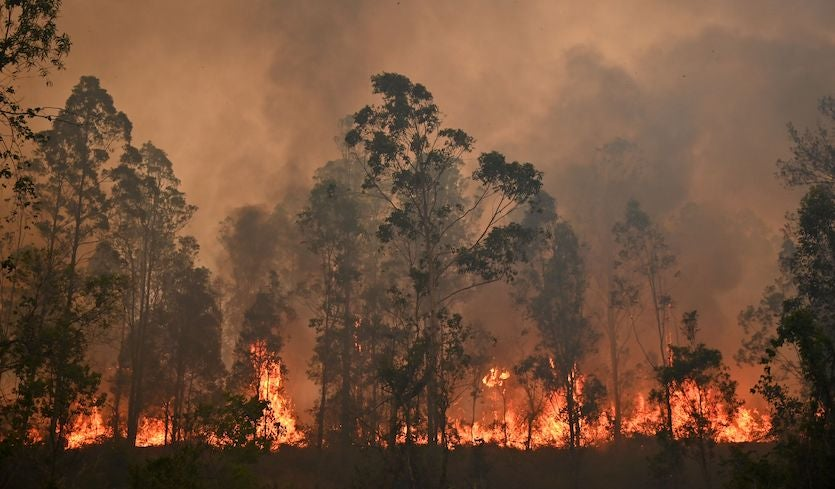
According to the Australian Institute for Disaster Resilience, “bushfires are a natural, essential, and complex part of the Australian environment, and have been for thousands of years,” to stimulate new growth in their aftermath. But when do “fires [that] scorched more than 24 million hectares, killed 33 people directly, and caused almost 450 more to lose their lives from smoke inhalation” reveal that this natural phenomenon has become unnatural? The data that began our interest was on Australian fires during the summer of 2019-2020, also known as Black Summer (the fires described above). This dataset comes from two original sources, MODIS and VIIRS, NASA satellite instruments used for fire detection in real-time. Based on the dataset, we began our analysis of the history leading up to this catastrophe, including worsening climate change and decreasing Indigenous fire management practices.
Effects of Australian Bushfires on Wildlife and Biodiversity
Researchers agree that Australian bushfires have significant effects on wildlife and biodiversity. Dunstan et al. (2021) performs a clinical assessment of Black Summer fires on Kangaroo Island and Southern Australia. These authors focus on rescued Koala bears, who experienced wildfire effects including severe burns, poor body condition, and dehydration. Next, Murphy et al. (2022) builds on this idea of profound impact. The resource dives into the effects on Melbourne’s food system, which faces increasing vulnerabilities as climate-related shocks become more frequent. Abram et al. (2021) explains that the Black Summer fires were unprecedented, pointing to their significance. Additionally, the paper warns that fire risk will rapidly increase in future years, due to climate change. These issues all speak to the varied impacts of Australian fires on wildlife, biodiversity, and local communities.
Human Migration Patterns and Climate Impact
Many sources highlight the role of climate change in Black Summer fires and warn that fire risk will increase over time. Bradstock (2010) describes moisture and tree cover levels as factors that are affected by climate change, and that influence fire frequency. Abram et al. (2021) expands on the idea of fire risk factors, explaining how climate change contributes to them. Increasing CO2 levels, for example, can lead to greater fuel load, one of the key forest fire “switches” or ignitors. Rising temperatures can contribute to fuel dryness and fire-promoting weather. Next, Turner et al. (2020) shifts from discussing climate change contributions to fires by explaining how these fires have shaped and altered ecosystems. Changed environments, therefore, are both a byproduct of fires and a risk factor for future fires. Abram et al. (2020) warns that as climate change worsens, so will their impacts. More severe and frequent fires are to be expected.
To examine the effects of climate change impacts on the people experiencing them, researchers have turned to migration patterns. Gibbs et al. (2016) compared the consequences of staying in, or moving away from, communities that lived through the severe Australian bushfires of 2009. This source found those who relocated had fewer financial and/or relationship issues, indicating that moving away may have allowed people to avoid the impact of post-bushfire stressors. However, those who stayed experienced fewer “lingering effects” of the disaster exposure. The article reasons that shared processing of the event and a stronger sense of community may have contributed to this effect. This source explores the long-term consequences of climate impacts on individuals and communities. It reveals that even if people migrate away from the affected areas in the aftermath of a disaster, they will likely still experience lingering ramifications.
Bell et al. (2021) expands on this topic by exploring whether people will migrate away from worsening climate impacts if informed about the future and given the choice. Counterintuitively, the authors found that migration will move toward climate impacts, not away from them, as climate change worsens. This article uses a model of household migration, scenarios of projected coastal flooding in Bangladesh, and the scenario responses of 4,800,000 migrants as evidence. The researchers reason that migration decisions may be based on economic factors, like greater job opportunities near the coast. Additionally, they claim that people will slowly adjust to the “new normal” that worsening climate impacts create. This highlights the importance of research and advocacy on this topic. Individuals cannot tackle large-scale climate change on their own, and cannot afford to structure their lives around it.
Strategies for Fire Management Practices
Multiple sources argue that fire management should take into account regional differences. Bradstock (2010), for example, describes distinct biogeographic areas in Australia and discusses the importance of these differences in analyzing fire frequency. Factors such as moisture levels and tree cover areas are highly influential, and should be considered when making recommendations for fire management practices. Bowman (2013) agrees, explaining that regional biodiversity comes with associated fire risks. Australia has different types of forests in its northern and southern areas. In some places, prescribed burning (starting controlled burns with the aim of reducing future fire frequency and severity) might cause greater carbon emissions that fire suppression on a case-by-case basis. Some parts of Australia, however, might “biome shift” if left to burn, meaning their entire ecosystems could become different over time. This is partially due to climate change, which will only worsen fire frequency and severity in Australia (and globally).
Indigenous Fire Management Practices
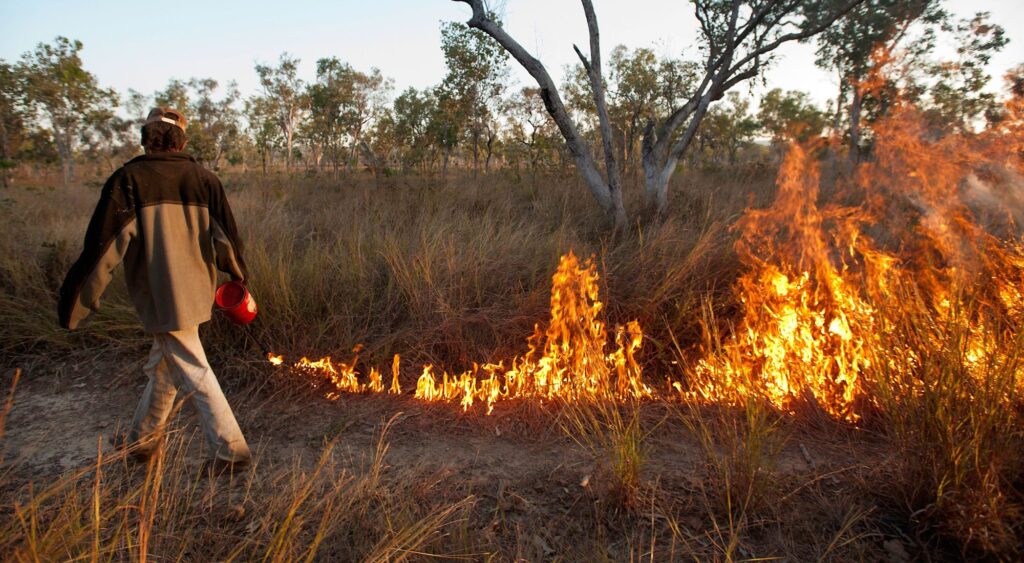
Researchers have compared land in Australia before and after British colonization. Adeleye et al. (2022) demonstrates that there has been a “major ecological shift” in Cape Pillar, southeast Tasmania, due to European colonization and the removal of Indigenous people. Mariani et al. (2023) also sheds light on this phenomenon, explaining that, before colonial invasion, much of the region had little tree cover. Bird et al. (2024) explains that Indigenous fire management practices included controlled burns that reduced uncontrolled wildfire, and increased biodiversity and vegetation in Australia. Indigenous perspectives are highlighted in the work of Edwards et al. (2016), Petty et al. (2015), and Williamson et al. (2020), who argue that although Indigenous people were some of the most greatly affected by Australian wildfires, they have been largely ignored by government response. Furthermore, they argue that Indigenous people have been shut out of land access and control and fire management. While much current literature agrees that this is a problem, they disagree on the solution. Bowman et al. (2013), for example, argues that parts of Australia today should use fire suppression, not controlled burns, based on their current land type. The idea that fire suppression is the optimal strategy continues to shut out Indigenous knowledge from fire management. On the other hand, perhaps Indigenous practices would be less effective on Australia’s current land, which has suffered from uncontrolled burns for years. This literature takes a largely historical and scientific approach, raising questions about what the next steps should be.
Significance
Australian bushfires affect wildlife and biodiversity, human migration, individual finances and relationships, and Indigenous communities. Because Indigenous peoples in Australia have been forcibly relocated, they have been largely unable to practice traditional fire and land management. The Black Summer fires were unprecedented, and worsening climate change predicts increased fire severity and frequency. In these times of catastrophe, it is necessary to re-evaluate current practices. Our project builds on previous research by examining Black Summer fires in chronological context, analyzing where fires were most severe, and exploring the relationship between Indigenous land management and fire frequency. We hope to gain insights about our current state, and assess solutions for the future. Our data analysis may support collaboration between Australian federal agencies and Indigenous peoples, for example. Incorporating Indigenous voices and techniques into environmental planning could lead to more resilient ecosystems and communities in the face of increasing fire risk.
Research Questions
We chose some research questions that helped guide our study of Australian wildfires between 2019-2020.
How has colonization affected fire practices in Australia?
How have changing seasonality trends influenced the pattern of Black Summer fires?
How has Indigenous land management contributed to the frequency of wildfires?
Up Next